

Ecommerce
Website Design
in Qatar
Ecommerce website design in Qatar that makes shopping clear, from the first visit to checkout.
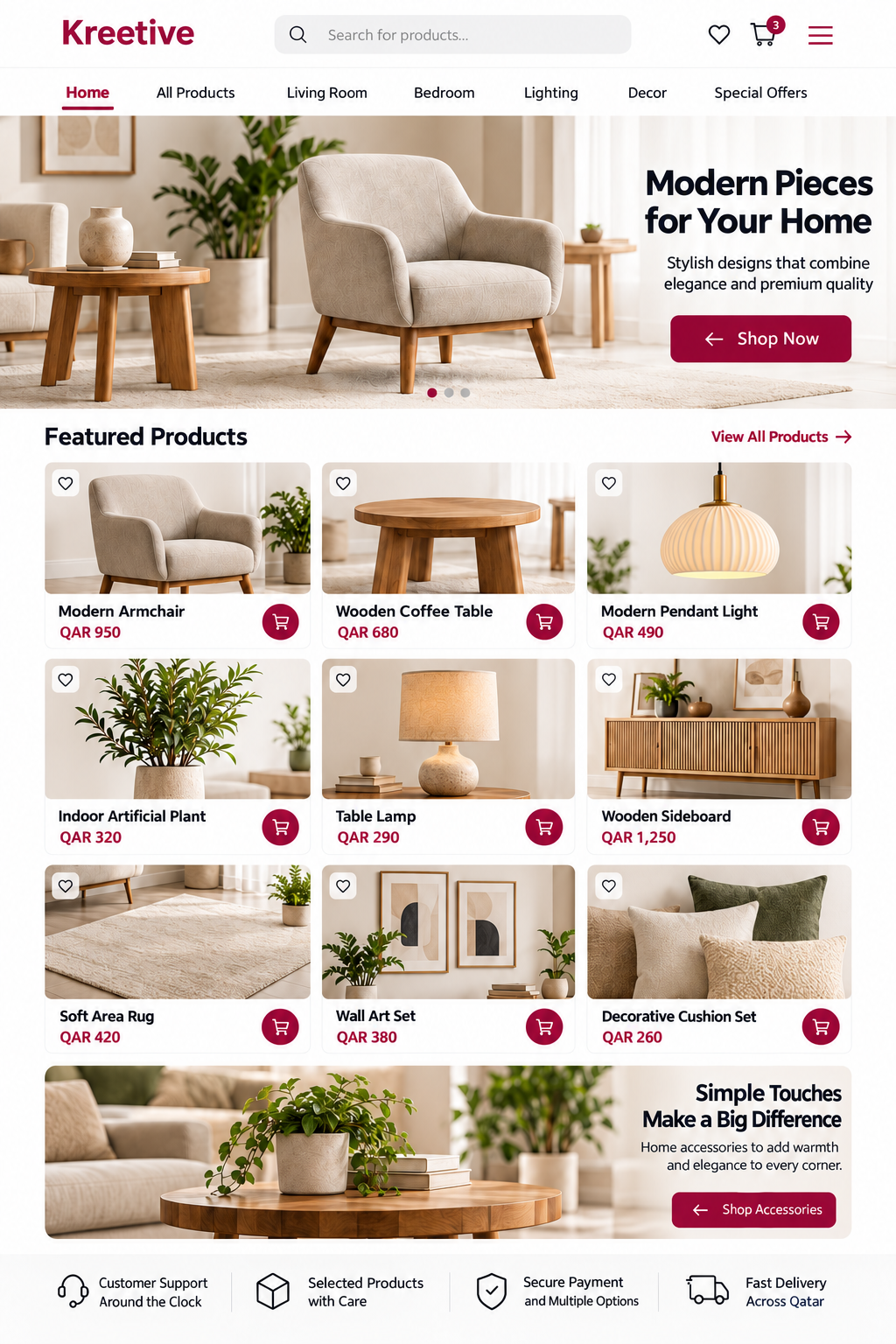
Clear images and useful options make choosing easier.
Colour · Size · Quantity
Review your options, order details and delivery information.
Made for Mobile
Organised Management
Simpler Shopping
Clear Products
A Clear Journey
from Browsing to Checkout
Help customers find, choose and order with confidence.
Find the Right Products
First, we organise the home page and categories around how customers browse. Clear names and relevant images help visitors choose a direction. For larger catalogues, we plan useful search and filters, such as size, colour or product type. These depend on the information available in your catalogue. The aim is to narrow the choice without adding options that get in the way.
Choose a Product
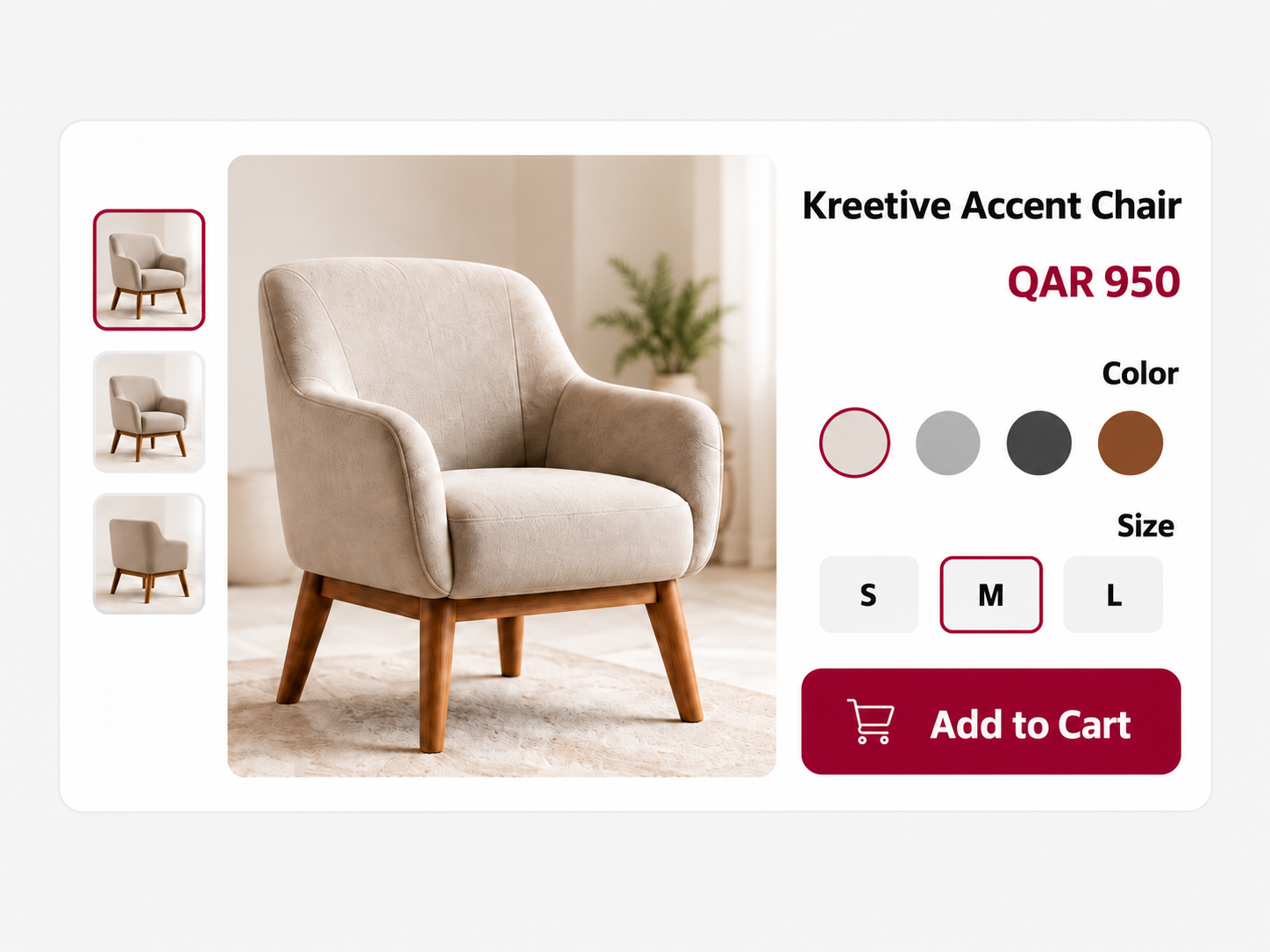
A product page should help someone decide. We arrange the images, description, specifications, options, price and delivery information in a clear order. We also check how these details appear on mobile. Together, we agree how many products need to be prepared, who supplies the images and data, and how to resolve missing details before launch.
Complete the Order
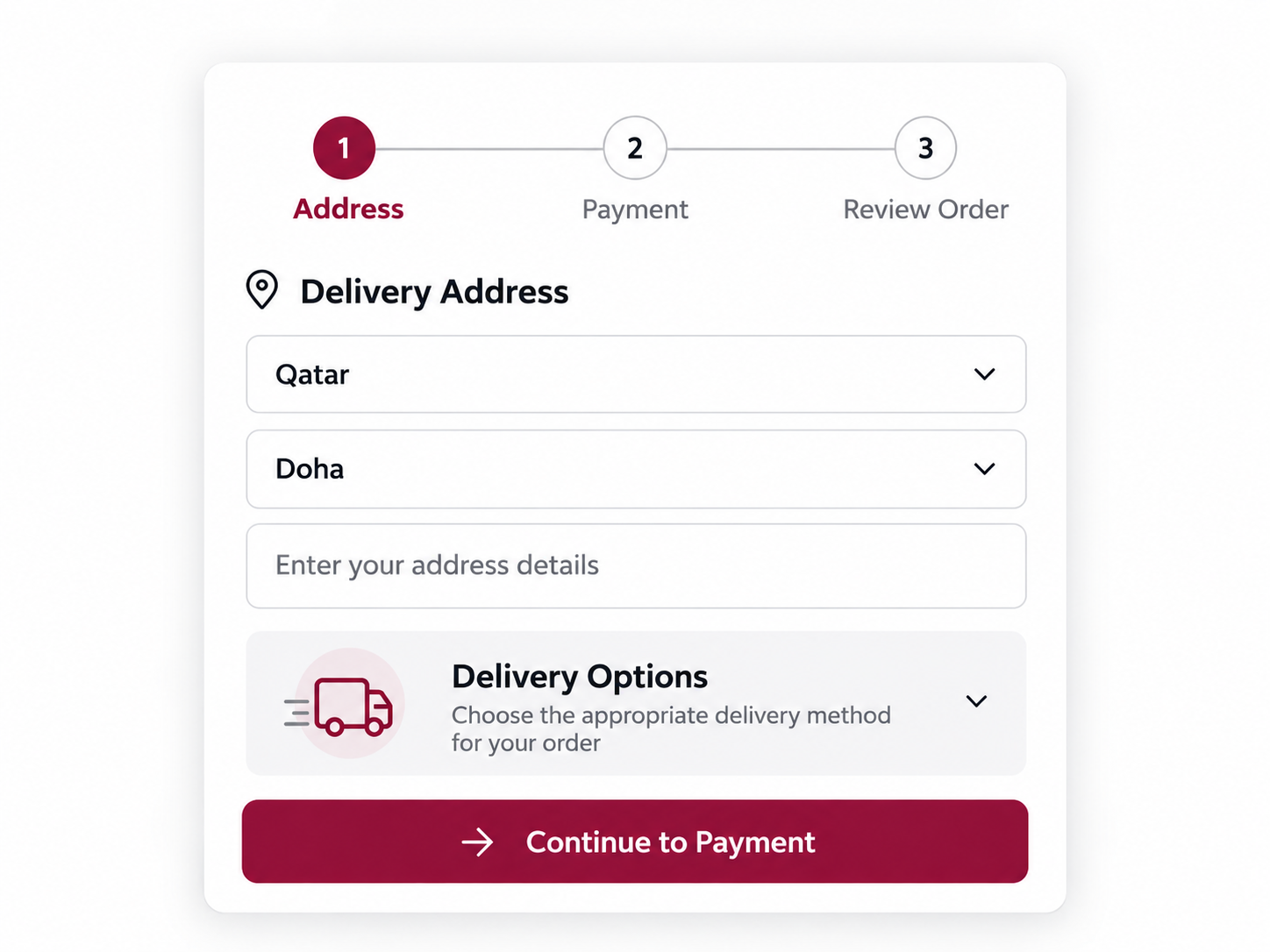
Next, we review the steps from the product to the basket and customer details. Quantities, options, totals and validation messages should be easy to understand. Customers should also be able to change a choice without starting again. We plan address fields, payment and delivery around the agreed requirements. Finally, a clear confirmation explains what happens after the order.
Built Around Your Customers
At Kreetive, we start with your products, customers and sales process. Then we shape the pages, content and features around the way people choose and buy. Your store should be easy to use on a phone and practical for your team to manage after handover.
A good store reflects the products it sells. Fashion shoppers need clear sizes and colours. Furniture buyers need images and details that help them picture an item at home. Specialist products may need a different way to explain features and use. That is why we discuss your business before we define the pages, functions and visual direction.
We keep the details that influence a purchase close to the decision. What does the product offer? Which options can the customer choose? How can they order, and what happens next? Clear answers reduce uncertainty. We also bring your colours, typography and imagery together, so the experience feels like one consistent brand across the store.
Details That Make Shopping Better
A clearer experience for customers and practical tools for your team.
Products and Options
We give your catalogue a structure that your team can manage. This may include categories, images, descriptions and choices such as size or colour. The platform also determines how availability is shown. A ready catalogue needs different work from a collection of incomplete files. Therefore, we agree the product and variation counts early, so the quote reflects the work involved.
Comfortable on Mobile
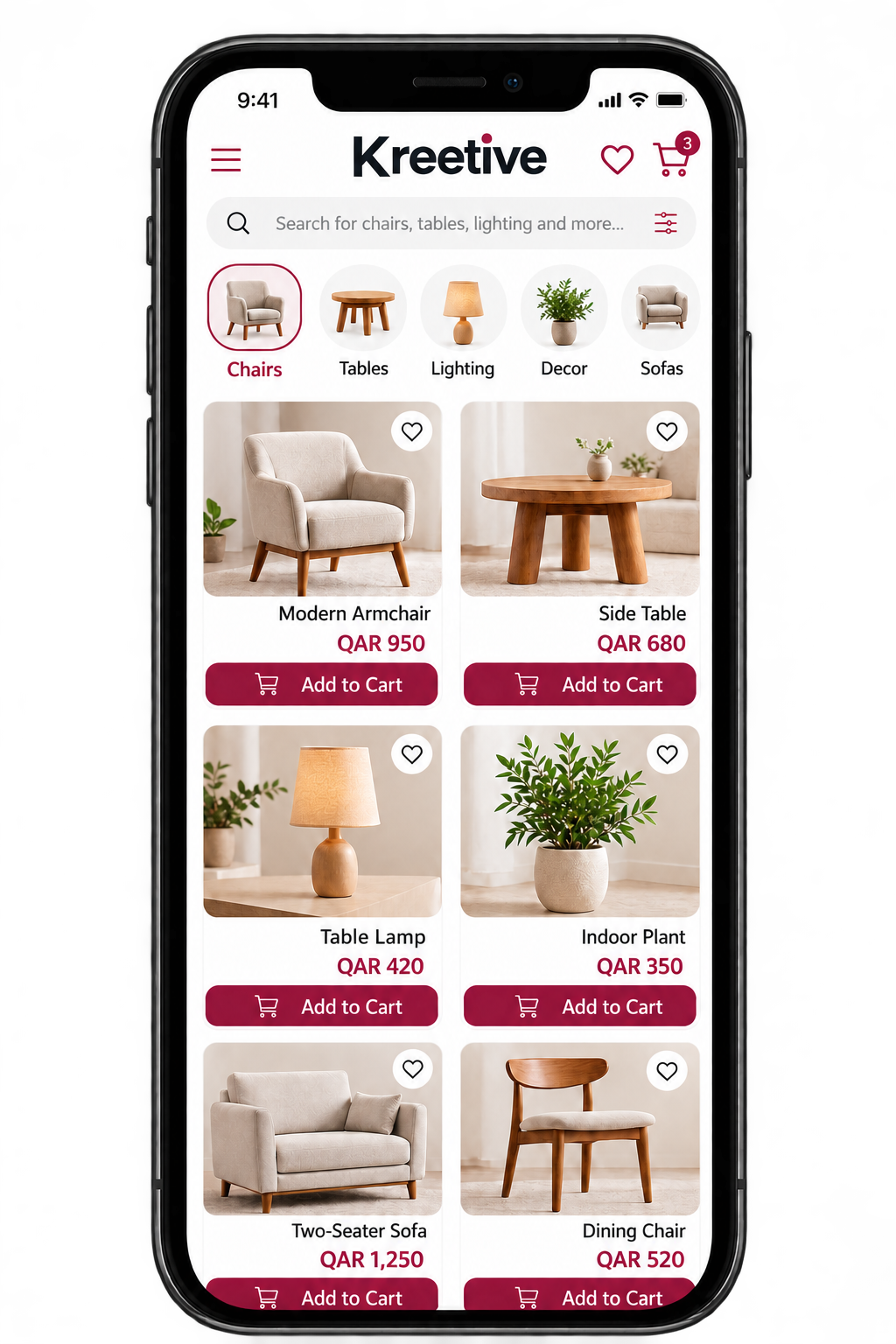
We check text sizes, buttons and access to categories and the basket on a phone. Images, menus and checkout fields also need to work in a smaller space. A desktop layout may need a different order on mobile. Our review covers the agreed screen sizes and touch interactions. We avoid elements that cover content or make the next step harder to reach.
Payment and Delivery
Before we build the order journey, we discuss payment methods, delivery areas and how charges are set. Integration depends on the chosen platform, provider and the requirements for your account. The scope names the services you need and any outside subscriptions or fees. It also explains who provides and manages each account. As a result, you can assess both the build and its running costs.
Products and Orders
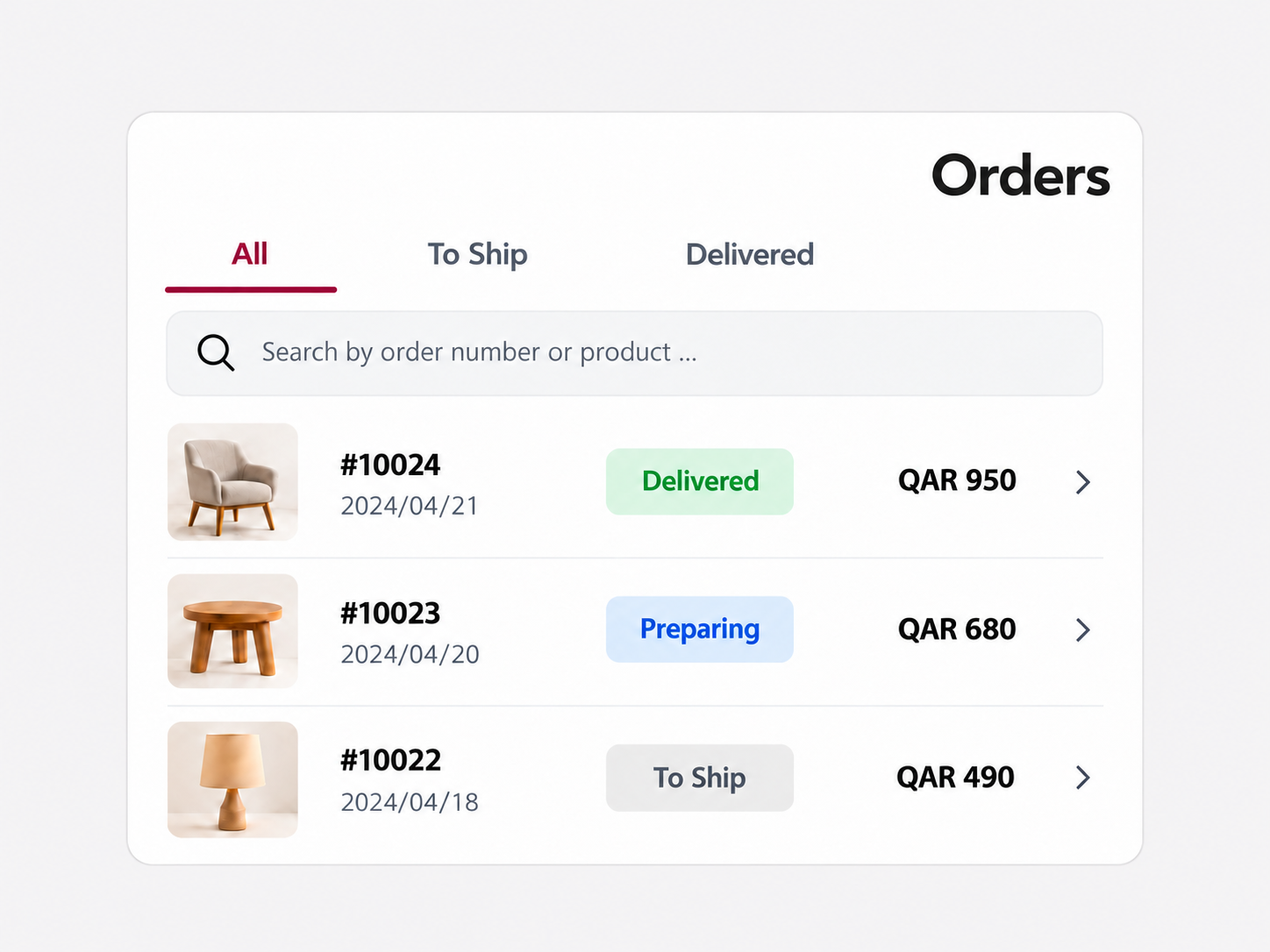
A store needs care after launch. We discuss who will update products, review orders and speak with customers. Then we prepare the management tools and access levels available on the platform. Handover explains the agreed daily tasks. We also distinguish work your team can handle from tasks that need technical support, so the responsibilities for running and updating the store remain clear.
See Your Store
in Motion
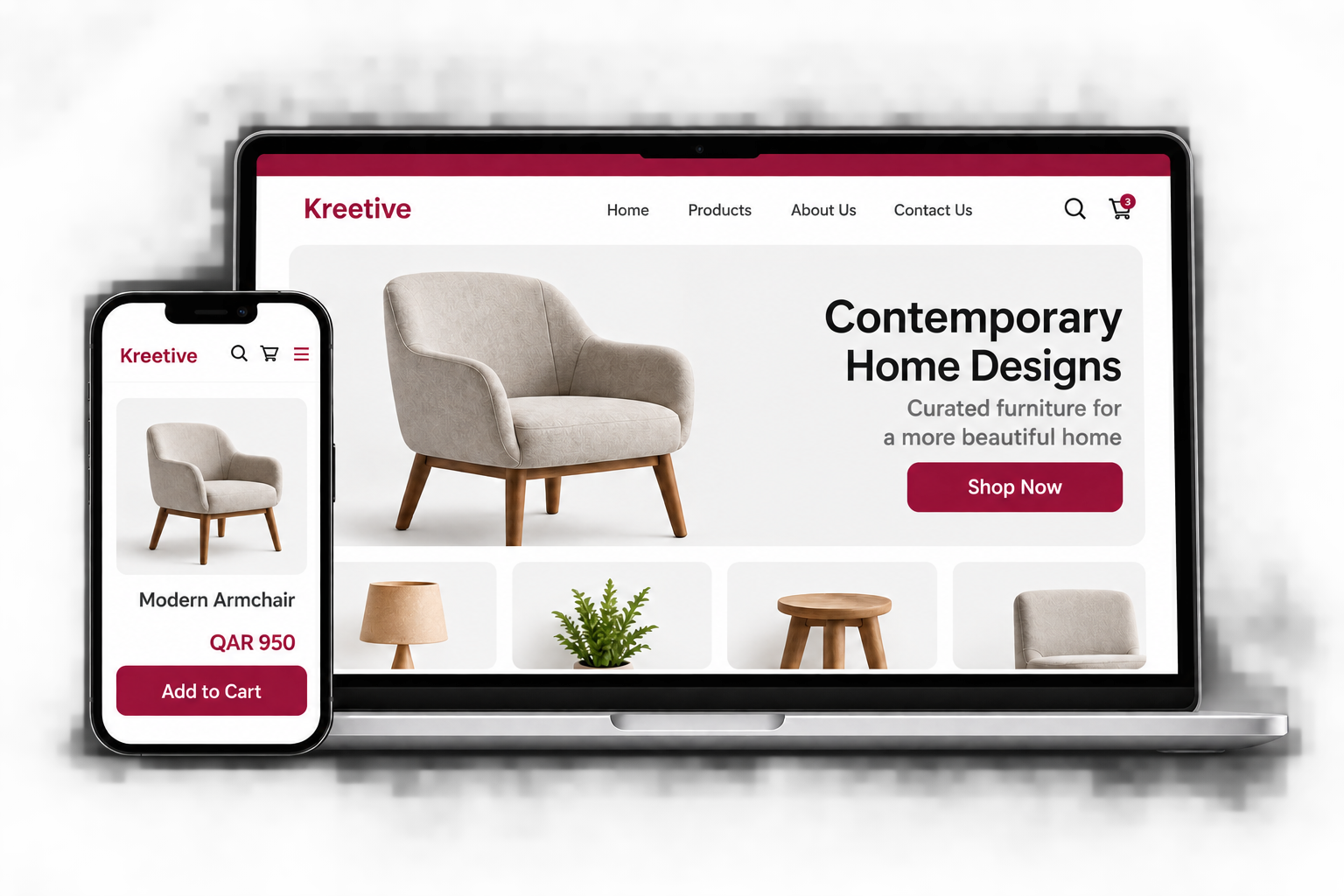
Explore an illustrative shopping experience inside a desktop screen and phone. The pages scroll within fixed device frames, and you can pause the motion. Switch between product categories to see another visual approach. These examples explain the proposed experience; they are not additional client projects or sales results. Your final store will reflect your own brand, products and agreed requirements.
Clear images and useful options make choosing easier.
Colour · Size · Quantity
Review your options, order details and delivery information.
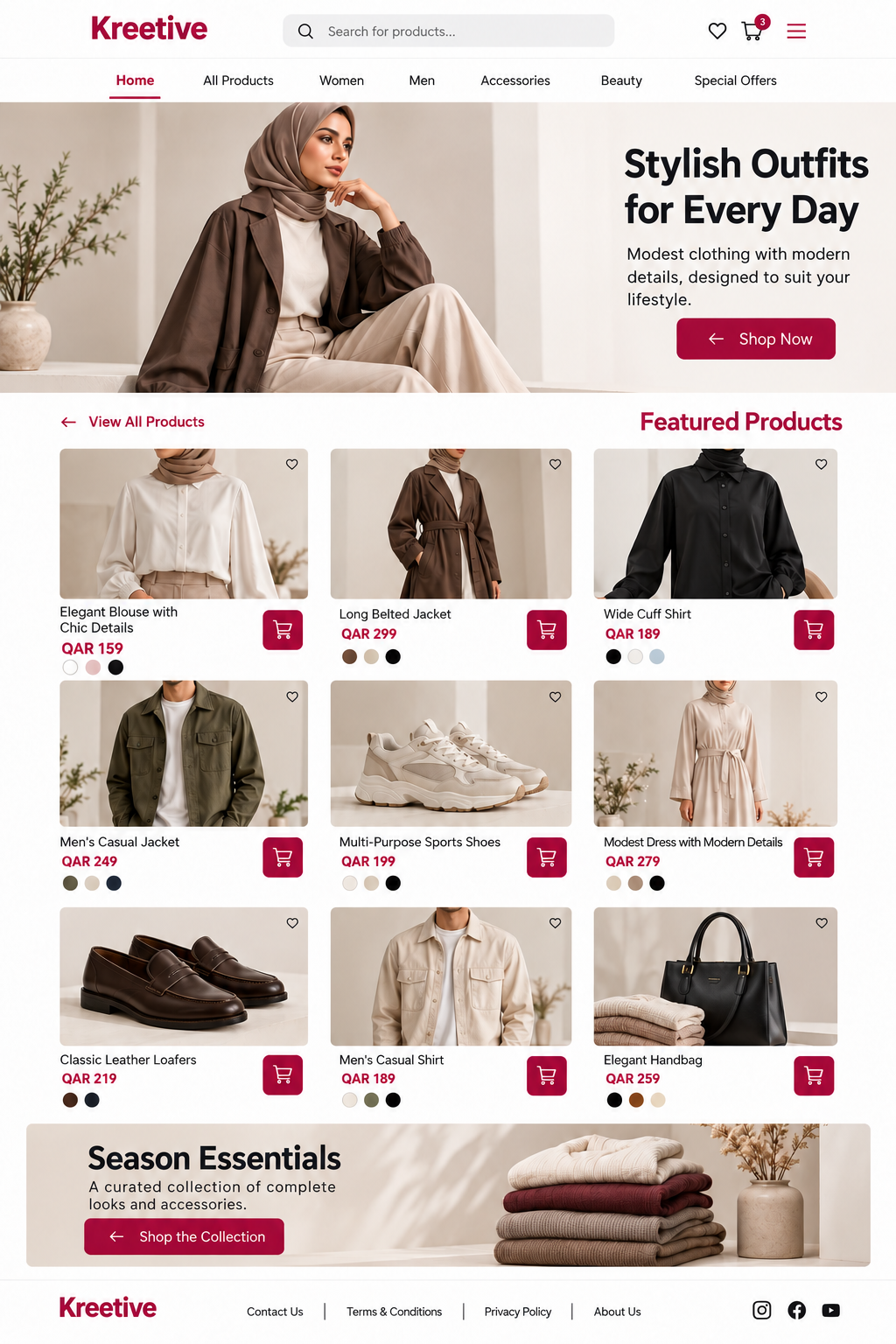
Check the size and colour before you order.
Colour · Size · Quantity
Review your options, order details and delivery information.
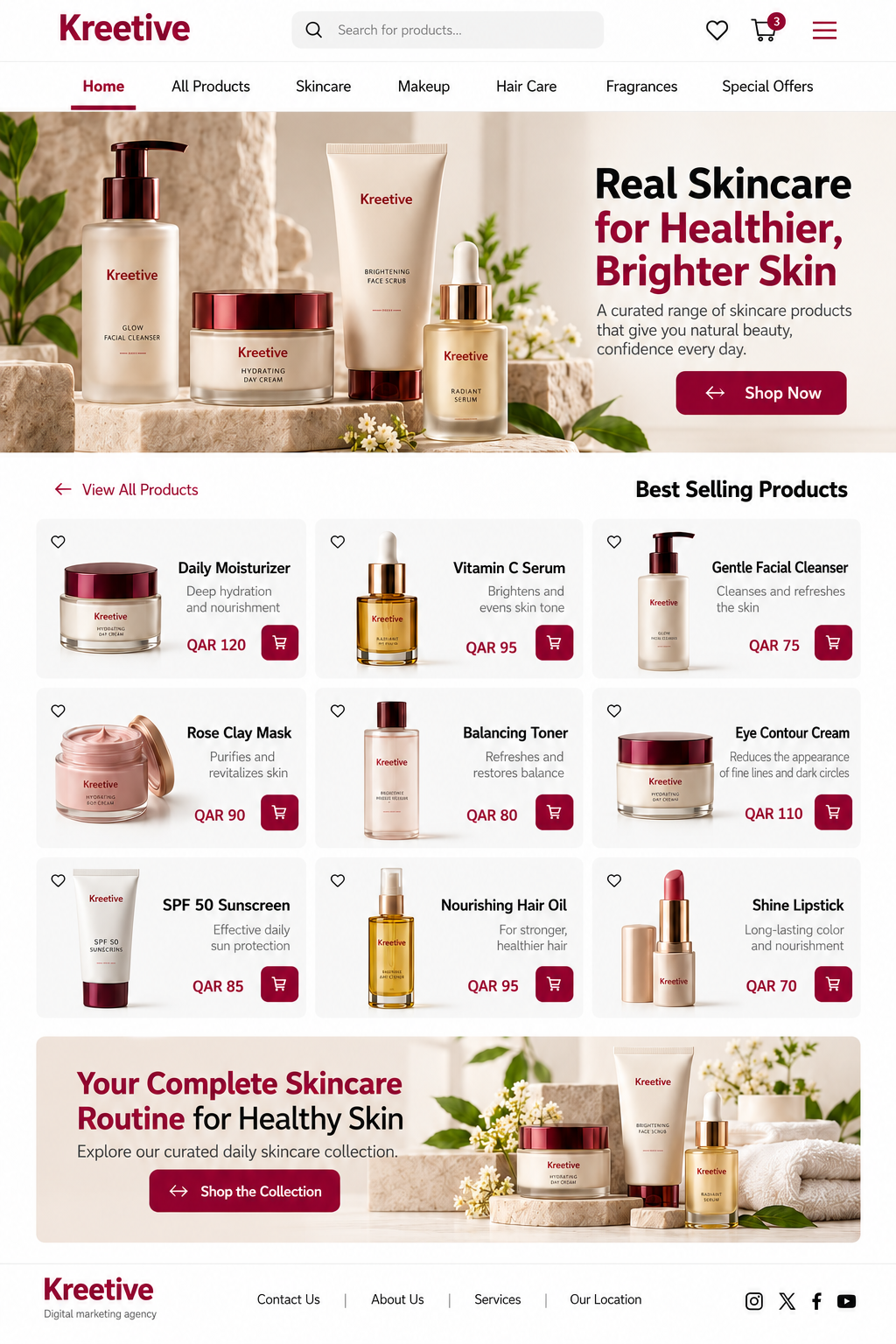
Product details and directions in one place.
Colour · Size · Quantity
Review your options, order details and delivery information.
Illustrative design demos. Products and prices shown inside the screens are examples only.
An Organised Store.
A Clearer Path to Discovery.
Search-friendly ecommerce website design in Qatar starts with organised information. We plan categories, product pages and the links between them. Clear headings and useful descriptions help explain what each page offers. We also review image descriptions and which pages should be available to search engines. These foundations belong in the agreed scope, rather than being left until the last stage.
Product names, options, images and details should be accurate and consistent. Where the platform and data allow it, we review suitable structured data for the store. We also consider search pages, filters and similar URLs within the site structure. These are foundations for discovery. Ongoing content, measurement and improvement can form a separate growth plan with clear deliverables.
Content That Helps People Choose
Useful product copy explains what an item offers and who it suits. It then answers questions that could delay a purchase. We recommend clear images, accurate specifications and consistent options. The content plan defines what your team supplies and what needs writing or review. Store information, contact, delivery and return pages should also connect the experience before and after a customer places an order.
A clear structure helps customers find products and make a choice.
Ecommerce Website Design
in Qatar: What Shapes the Cost?
The cost of ecommerce website design in Qatar depends on the store you need. Product variations, languages, design customisation, data entry and integrations all affect the scope. A small catalogue with ready content differs from a project that needs data clean-up or migration. We discuss these points first, then prepare a quote around the actual requirements.
Your proposal sets out the pages, functions, reviews, tests and handover. It also identifies outside services and subscriptions that the chosen platform may need. If you have a set budget, we can discuss a focused first release with the essential features. Further development can then follow in stages, keeping the priorities close to what the business needs to operate.
From Your Brief to Store Launch
Define the Scope
We learn about your business, customers, products and current order process. Then we discuss languages, delivery, payment and the required features. A written scope records the pages, integrations and source materials. It also clarifies responsibilities and the expected schedule based on the project’s needs and content readiness.
Design the Journey
We organise the content and navigation before presenting the visual direction. Together, we review categories, product details, the basket and key steps. Your brand and mobile users guide the layout. Once you approve the direction, we agree the changes needed before building the store and its features.
Build and Connect
We turn the approved design into pages and elements you can manage. Products and functions follow the agreed scope. Connections to outside services depend on account readiness and technical requirements. If a new request affects the schedule or deliverables, we discuss it with you before adding it to the work.
Test and Hand Over
We review the agreed paths, from browsing and product choices to order details and confirmation. Suitable test methods avoid unintended live purchases. Handover covers the agreed accounts and daily management tasks. It also makes the support, updates and approved launch steps clear to your team.
Your Ecommerce
Questions Answered
How much does ecommerce website design in Qatar cost?
There is no single price for every store. The catalogue, design, languages and integrations all affect the work. Once we understand your business and required features, we can prepare a proposal with clear deliverables and related costs. Share a short brief with us to discuss a suitable scope.
How long does it take to build a store?
The schedule depends on the scope, catalogue, images and content, as well as review approvals and outside services. We set out the expected stages after reviewing these details. If the requirements change, we explain how that affects the timeline instead of promising the same duration for every project.
Can I manage products and orders myself?
We define the tasks your team needs and explain how to handle them on the chosen platform. These may include adding products, changing images and prices, and reviewing orders. Access depends on the prepared roles and features. Handover also clarifies when a task needs technical help or further development.
Can the store connect to payment and delivery services?
We can review suitable connections based on your platform and the provider’s technical options. Account activation, requirements and fees must be checked first. The proposal identifies the integration and explains who supplies the account details and manages the service before we begin the connection.
Can the store support Arabic and English?
Both languages can be included in the scope. We identify which pages and products need content in each language, then agree who supplies and reviews the translation. Shared options and categories also need a clear plan. We review reading direction and navigation to make each language feel natural.
Does the project include search optimisation?
The proposal explains the SEO foundations included in your ecommerce website design in Qatar. These may cover structure, headings, internal links, images and suitable indexing settings. They differ from an ongoing content and optimisation plan. If you need support after launch, we can discuss a separate scope with clear outputs.
Can you improve or migrate an existing store?
We first review the current platform, content, features and important URLs. The scope depends on what can be exported and what needs organising or rebuilding. A migration plan also explains how to handle important pages and products, with the aim of reducing disruption during the agreed move.
What should I prepare for a quote?
A short business overview, product types and approximate counts are a useful start. Include the languages, delivery areas and services you want to connect. You can also share your brand files, images, catalogue and design references. If some details are not ready, we can begin by clarifying the needs and priorities.
Start Your Store
with a Clear Plan
Planning a new store or improving an existing one? Tell us about your products and first-stage needs. We will discuss the pages, features and content before preparing a proposal. This gives you a clear view of the work, your team’s operating needs and the options for future development as the business changes.
Explore Kreetive services or contact our team.